Process
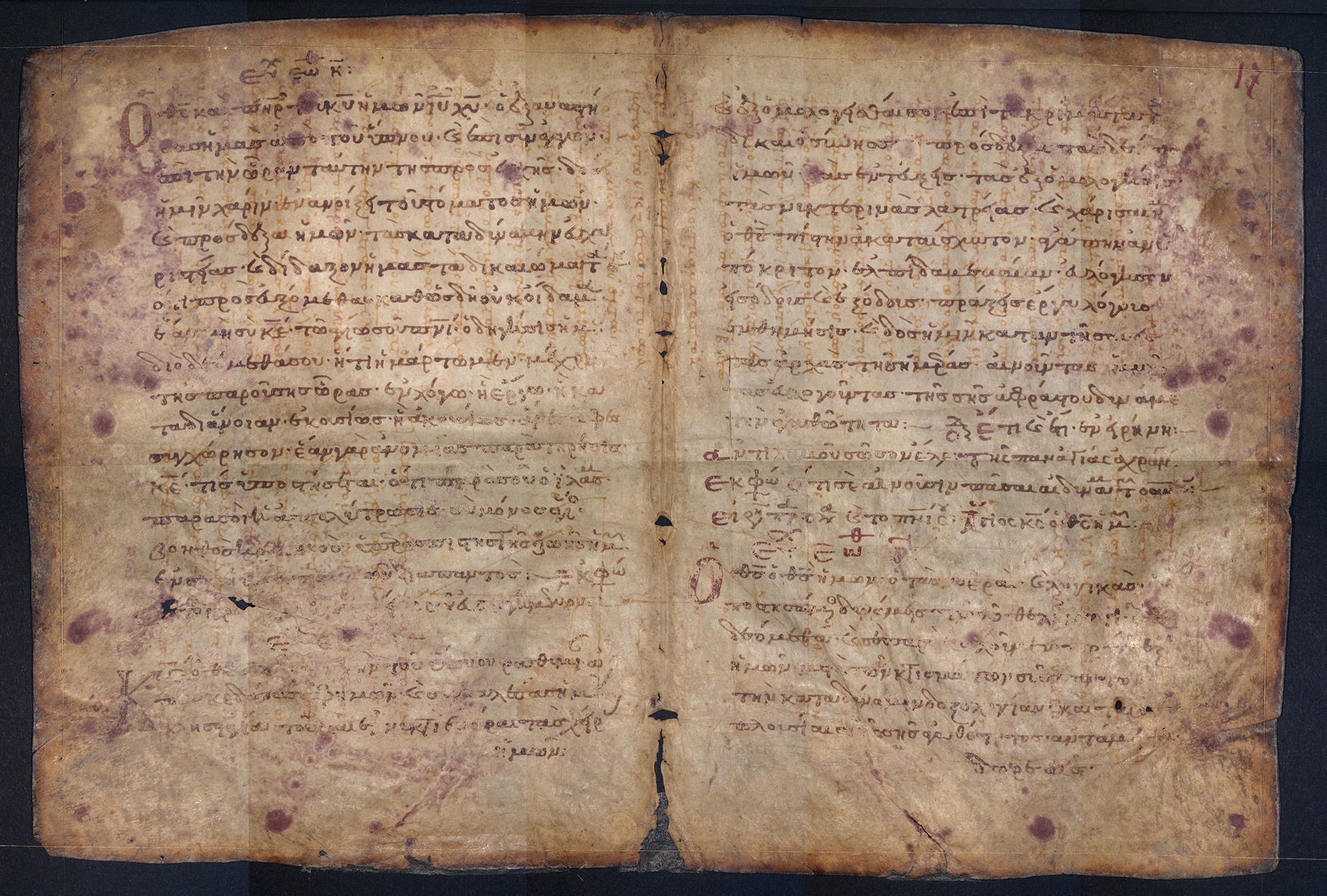
Palimpsest (noun) — A manuscript or piece of writing material on which the original writing has been effaced to make room for later writing, but of which traces remain.
Medieval scribes routinely recycled parchment, scraping away earlier text to write anew — yet traces of what came before remained, buried beneath the surface.
Using ultraviolet light or X-ray techniques, modern scholars have recovered these hidden layers, most famously in the Archimedes Palimpsest: a tenth-century prayer book found to conceal mathematical treatises lost for centuries beneath later religious writing.
In literature and architecture, the palimpsest has come to mean something broader — anything that carries its own history within it, where the past persists in glimpses beneath the present surface.
Each card begins with a found layer — a page from a book, an invoice, a child’s unfinished drawing — something already marked by life. Onto this, further marks are laid. Then more. Then more still. The cards are set aside, forgotten, retrieved, worked on again — across days and weeks and months — gathering their layers slowly, the way sediment gathers, the way memory accumulates. What emerges is not designed but discovered: an abstract record of time and attention, unique to the moment of its making and the hand that inscribed it.
Cataloguing
The irony was predictable. After over 250 cards, each one featuring a unique artwork — produced without a predetermined plan, all of them purposefully, perversely individual — it became necessary to impose a system to keep track of them.
The cards needed to be catalogued, numbered, tracked — if only so they could be logged for this website. The work of making them had always been free from such concerns; the work of recording them was anything but.
At first, handwritten stickers: a number scribbled in pencil on a small sticky label, added to the clear wrapper that protects each card. It worked, for a while — sustained by the same oddly obsessive mindset that generated the cards themselves.
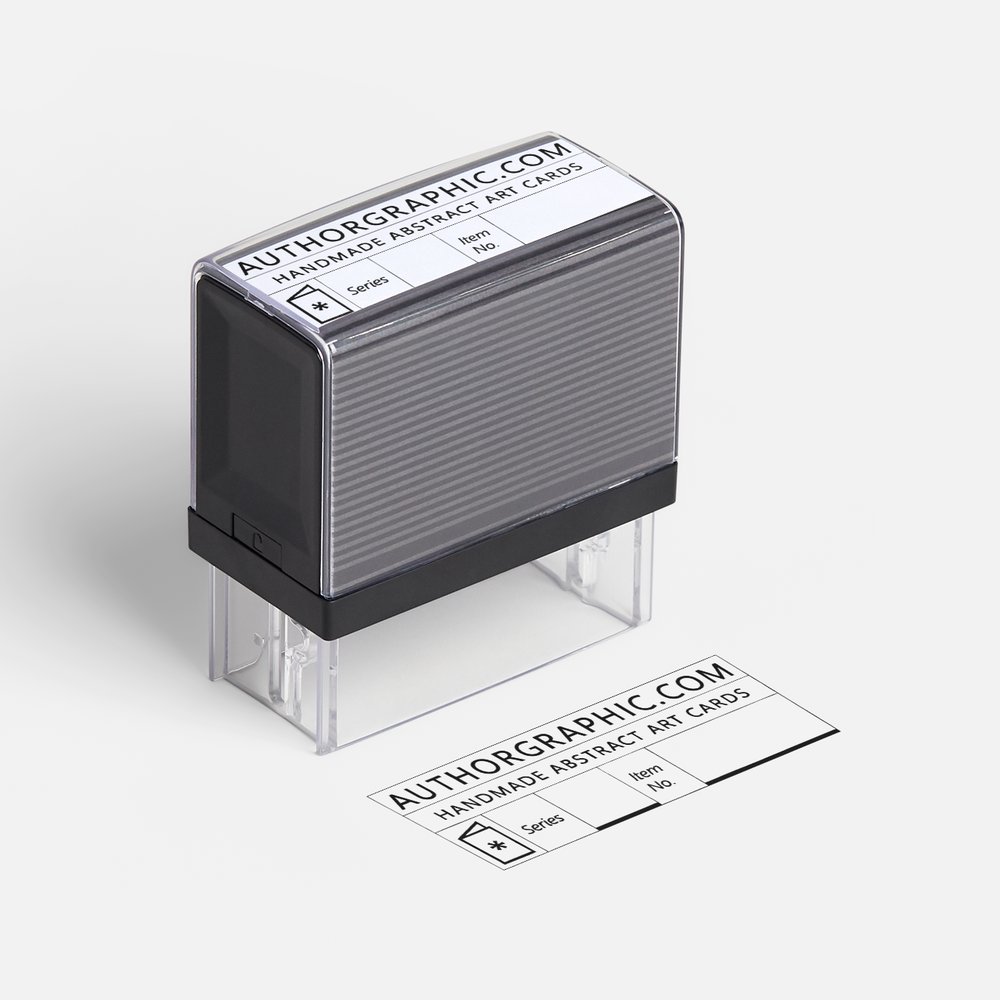
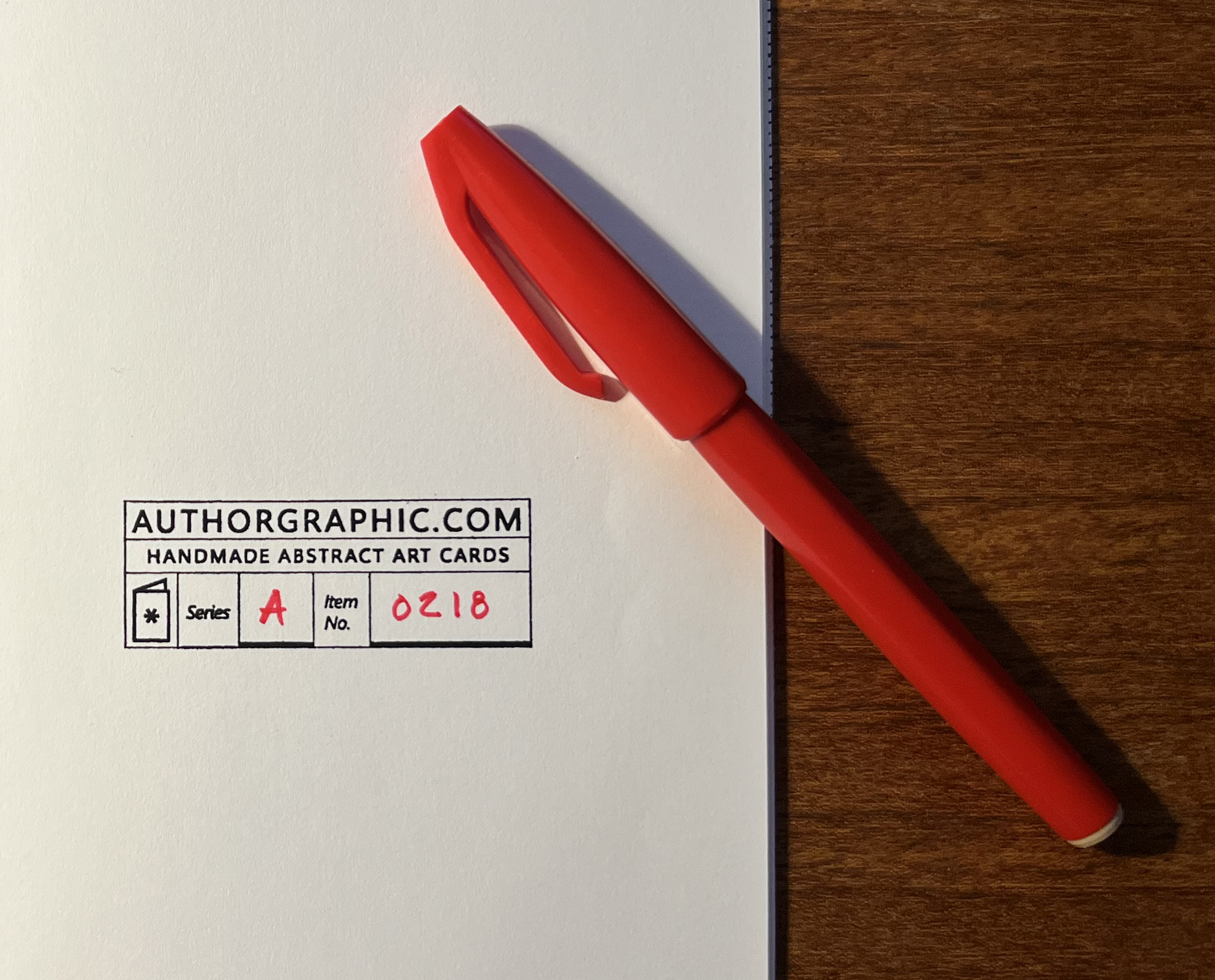
So a stamp was designed. Old-fashioned in spirit — the kind found in a library catalogue or a municipal archive — with boxes for ‘series’ and ‘item number’… to be filled in by hand.
From the mid-200’s onwards, every card now carries this stamp on its reverse: a neat, inked record of where it belongs in the sequence. A small reminder that every card is unique, never to be repeated.